Benefits and added value

  • Processing any type of waste into a valuable raw material (operating material)

    • This is blended with inorganic additives
  • Capture and reduction of CO2 → decarbonisation of up to 99.9% from industrial and commercial production processes

  • Carbon sink in the synthesis process

    • Molecular conversion of carbon
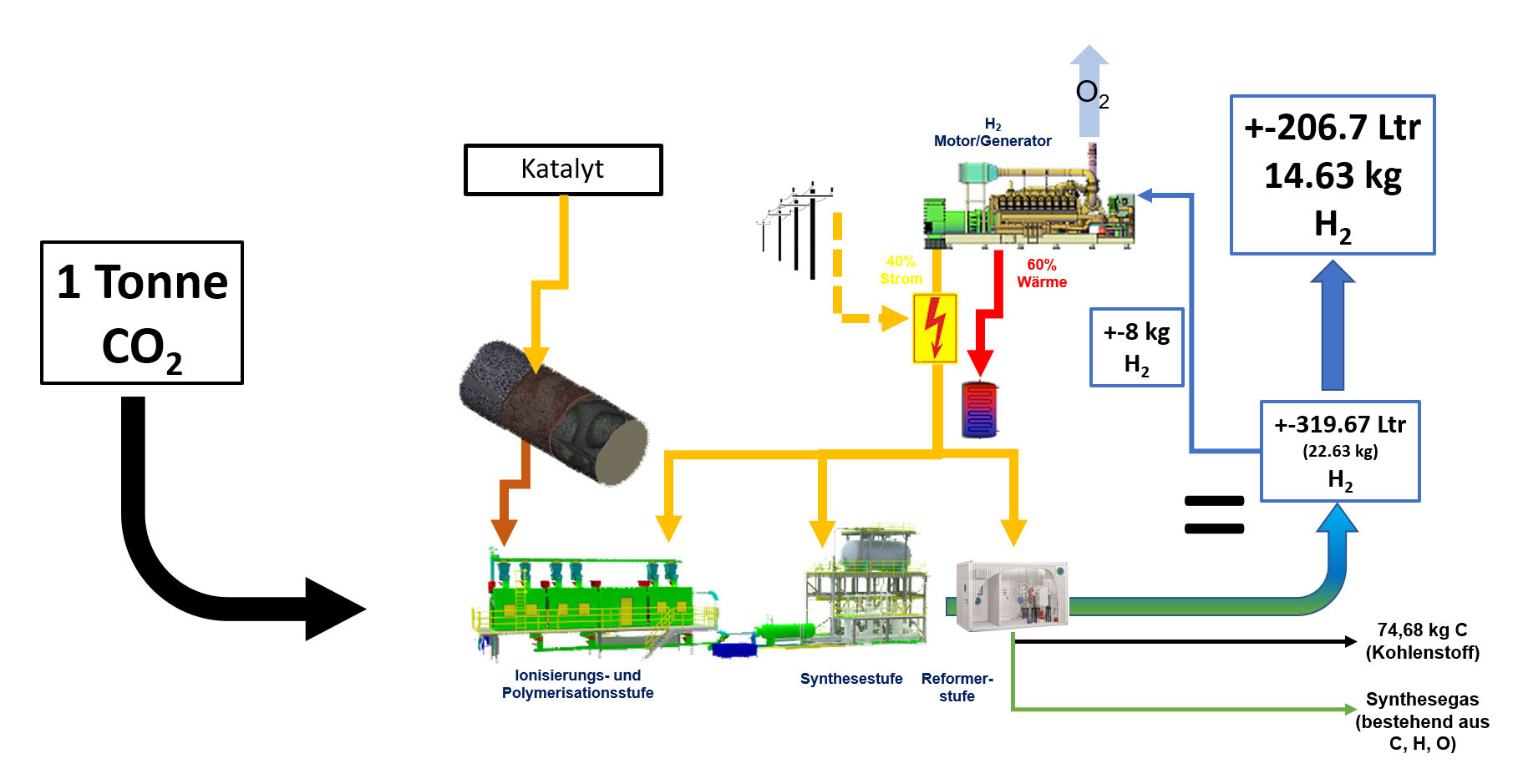
    • Production of hydrogen using the operating material
  • Use and conversion of hydrogen via a special process

    • Basis for energy use
    • Production of large quantities
      • Electric power
      • E-fuel
      • Biodiesel, also as plant diesel for industry and commerce
  • Production of green, high-performance fertiliser without any pollutant additives
  • Progress for a new building culture → production and application of Roman concrete in a 3D printer

    • Proven durability of buildings: 3,000 years.
    • Earthquake-resistant construction
    • Special aggregate material without pollutants.
    • Carbon components increase stability (carbon effect).
    • No dew formation (condensation)
    • The paste is supplemented with special water and proportions of organic stabilising substances
    • Setting time (open time) adjustable to the second
  • Production of fire-protection panels for any application

  • Production of a lithium substitute via a special process using the operating material

Compared with other established technologies, processing one tonne of CO₂ requires only a small additional energy input of less than 60 kWh.

  • The production costs of the sustainable end products are particularly competitive.

  • The versatility of the process creates numerous opportunities for new jobs within an emerging industry.

  • Our USP is an investment in the future—and we have already taken the first step.

With a return on investment of five to seven years on attractive terms, this represents an exceptionally attractive investment opportunity.